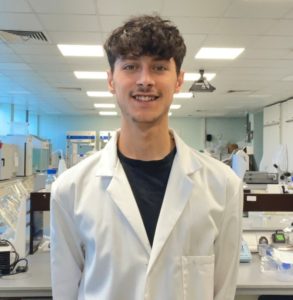
PhD Student
My research career began in marine biology, not plant science. During my BSc at the University of Plymouth, I explored diverse organisms from corals to birds, but my passion for research truly ignited during my undergraduate project on marine sponge morphology and untargeted metabolomics. This led to my Masters in Research project, where I investigated phenotypic plasticity in the “Crumb-of-bread” sponge (Hymeniacidon perlevis). My Masters research demonstrated how an organism’s morphology and biochemistry interact to determine function, a relationship that is ultimately shaped by the environment. My interest in this interplay of morphology, chemistry and biological function is what motivated me to join the Mechanical Ecology Lab.
My PhD project investigates how micro-morphology and chemical composition interact to create ‘super-wettable’ trapping surfaces in carnivorous pitcher plants. When wetted, these surfaces maintain a stable, thin water film that causes insects to slide into a cup-shaped trap filled with digestive fluid. By characterizing the chemical composition and surface topography of trap surfaces across three unrelated lineages of pitcher plants (Cephalotus, Heliamphora and Nepenthes), we seek to uncover general principles of how plants modify the wettability of their leaf surfaces. The second part of the project will be using replica models of these slippery surfaces to disentangle structure from chemistry and assess the effects of modifying topographic parameters on wettability. Finally, I will investigate how such specialised surfaces form during trap development. I will study whether similar surface patterns in unrelated plant lineages share common developmental pathways and are underpinned by similar regulatory genes. This research has transformative potential for sustainable agriculture. Understanding how plants modify their surfaces to become wettable, water-repellent or slippery for insects could help us to engineer crops with surfaces that are too slippery for pest insects to grip, thus reducing reliance on chemical pesticides.